
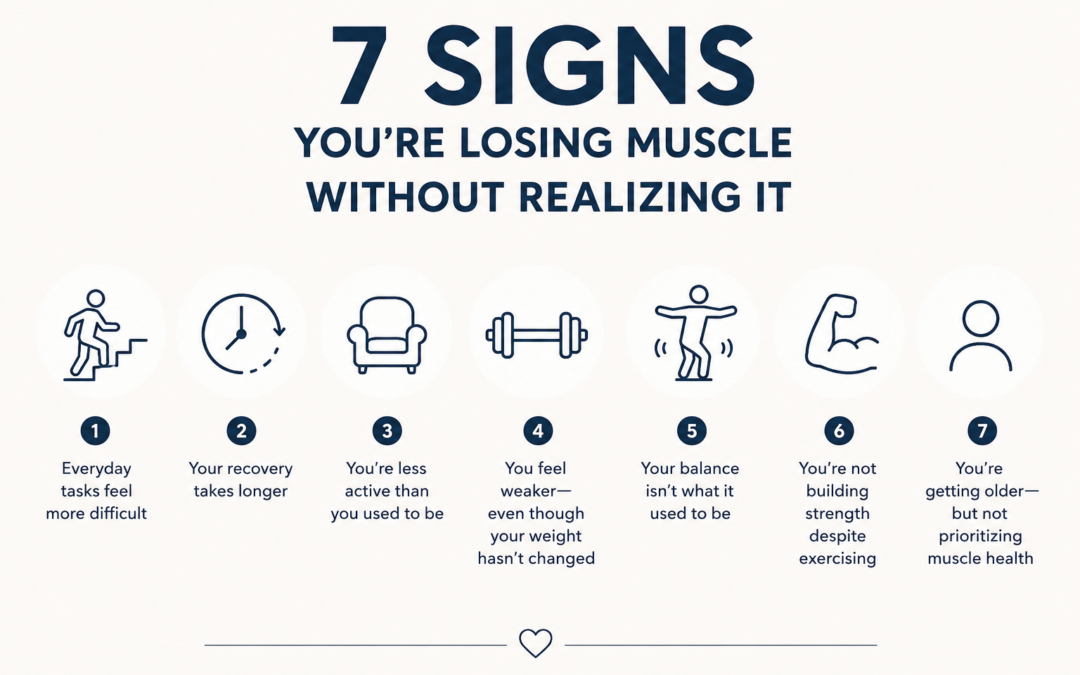
7 Signs You’re Losing Muscle Without Realizing It
Muscle loss doesn’t happen overnight. It develops gradually, often without obvious warning signs. Many people assume that losing muscle only affects older adults or those who stop exercising, but the reality is different.
Age-related muscle loss can begin as early as your 30s, and modern lifestyles—long hours of sitting, reduced physical activity, poor nutrition, illness, and stress—can accelerate the process.
The good news? Recognizing the early signs gives you the opportunity to take action before muscle loss begins to affect your strength, mobility, and quality of life.
1. Everyday Tasks Feel More Difficult
Have you noticed that carrying groceries, climbing stairs, lifting luggage, or getting up from a chair requires more effort than it used to?
Many people attribute these changes to simply “getting older,” but declining muscle strength is often an important contributor.
If routine activities become increasingly challenging, it may be time to pay closer attention to your muscle health.
2. Your Recovery Takes Longer
After a workout, a long walk, or even a busy day, your body may take longer to recover than it did a few years ago.
Slower recovery isn’t only about age—it may also reflect reduced muscle quality and the body’s decreased ability to repair and rebuild muscle tissue efficiently.
Supporting recovery through proper nutrition, regular activity, adequate sleep, and sufficient protein intake becomes increasingly important over time.
3. You’re Less Active Than You Used to Be
One of the biggest drivers of muscle loss is inactivity.
Many jobs involve sitting for long periods, and daily movement often decreases as responsibilities increase. Even people who exercise once or twice a week may spend most of their day inactive.
Muscles follow a simple principle: use them or lose them.
4. You Feel Weaker—Even Though Your Weight Hasn’t Changed
Body weight alone doesn’t tell the whole story.
It’s possible to maintain the same weight while gradually losing muscle and gaining body fat—a process sometimes called “hidden muscle loss.”
If opening jars feels harder, lifting objects seems heavier, or you notice a decline in strength despite stable body weight, changes in body composition may be occurring.
5. Your Balance Isn’t What It Used to Be
Muscles do much more than generate strength—they help stabilize your body.
Reduced muscle function can affect balance, coordination, and confidence during everyday movement.
Occasional stumbles or feeling less steady may seem minor today, but maintaining muscle health plays an important role in reducing the risk of falls and supporting long-term mobility.
6. You’re Not Building Strength Despite Exercising
Many people continue exercising consistently but notice that their progress slows or stops.
This doesn’t necessarily mean the workouts aren’t effective. As we age, the body’s response to exercise changes, making recovery and muscle protein synthesis less efficient than during younger years.
Exercise remains essential, but nutrition and recovery become increasingly important partners in maintaining muscle health.
7. You’re Getting Older—but Not Prioritizing Muscle Health
Muscle loss is a natural part of aging, but it is not something that should simply be accepted.
Research shows that maintaining muscle health supports mobility, metabolic health, independence, and overall quality of life throughout the aging process.
The earlier you begin supporting your muscles, the greater your opportunity to remain active and healthy for years to come.
How to Help Maintain Healthy Muscle
The good news is that muscle health can be supported at almost any age.
Simple habits can make a meaningful difference:
- Stay physically active throughout the week.
- Include resistance or strength training regularly.
- Consume sufficient high-quality protein.
- Prioritize sleep and recovery.
- Maintain a balanced, nutrient-rich diet.
- Avoid prolonged periods of inactivity whenever possible.
Consistency matters far more than perfection.
Final Thoughts
Muscle loss often develops quietly, long before it becomes obvious.
Paying attention to these early signs can help you take proactive steps to maintain your strength, mobility, and independence.
If you’re interested in learning more about why muscle health becomes increasingly important with age, read our related article:
Why Muscle Matters More After 40 Than Most People Realize
Taking care of your muscles today is an investment in your future health, confidence, and quality of life.