
Why Recovery Is More Important Than Your Workout
Most people believe that getting stronger is all about working harder.
They push through another workout, add more weight, or spend more time in the gym, assuming that more exercise automatically leads to better results.
But that’s only half the story.
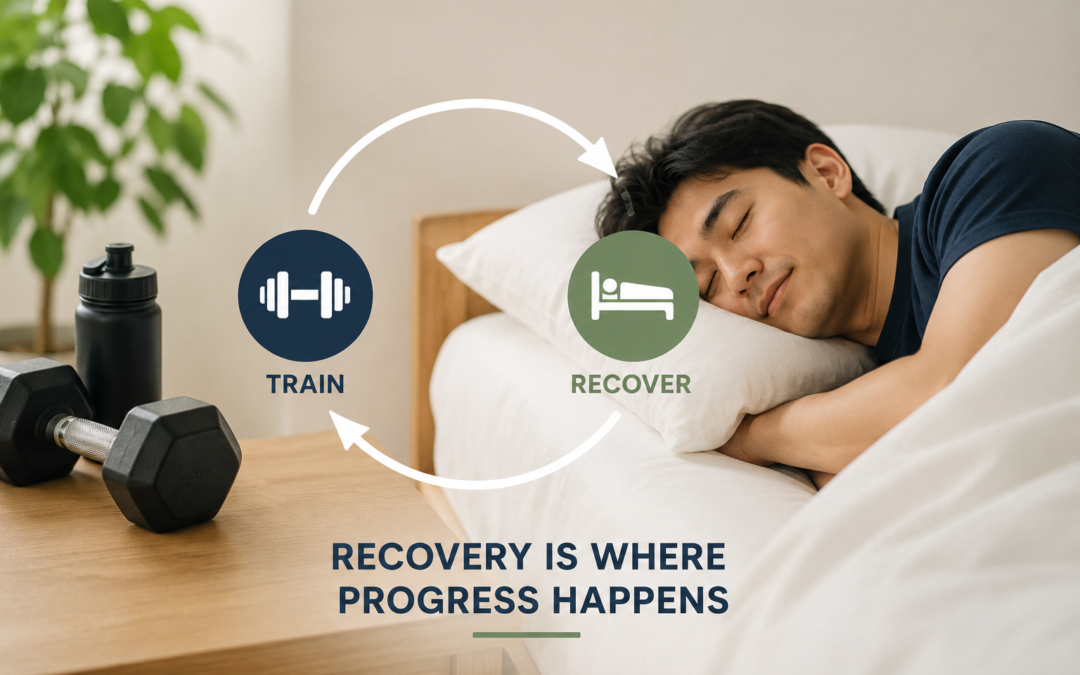
The real improvements don’t happen while you’re exercising. They happen after your workout, during recovery.
Understanding this simple principle can make the difference between steady progress and constant frustration.
Exercise Creates the Signal. Recovery Creates the Results.
Every workout places stress on your muscles.
This stress creates tiny amounts of muscle damage and signals your body to adapt. In response, your body repairs muscle tissue, strengthens muscle fibers, improves energy production, and prepares you for the next challenge.
Without adequate recovery, these adaptations cannot occur efficiently.
Put simply:
Exercise provides the stimulus. Recovery delivers the results.
Why More Isn’t Always Better
Many people believe that if three workouts per week are good, six must be even better.
Unfortunately, that’s not how the body works.
When recovery can’t keep pace with training, you may experience:
- Persistent muscle soreness
- Reduced strength and performance
- Low energy levels
- Increased risk of injury
- Poor motivation
- Slower progress despite working harder
This doesn’t necessarily mean you’re overtraining. More often, it means your body hasn’t had enough time—or the right conditions—to fully recover.
Recovery Is About More Than Rest
Recovery is an active process that depends on several factors working together.
Quality Sleep
During sleep, your body releases hormones that support tissue repair and muscle recovery. Poor sleep limits your body’s ability to rebuild after exercise.
Proper Nutrition
Recovery depends on giving your body the right building blocks. High-quality protein, essential amino acids, vitamins, minerals, hydration, and sufficient energy all play important roles in repairing muscle and supporting recovery.
Hydration
Even mild dehydration can reduce muscle function and slow the recovery process.
Stress Management
Exercise isn’t the only source of physical stress.
Long work hours, poor sleep, travel, and emotional stress all compete for your body’s recovery resources, leaving less capacity for repair and adaptation.
Recovery Becomes Even More Important With Age
Recovery naturally changes as we get older.
From around the age of 30, muscle protein synthesis gradually becomes less responsive. At the same time, maintaining muscle mass becomes more challenging, particularly during periods of inactivity or illness.
This is why many adults notice they:
- Stay sore longer
- Recover more slowly
- Lose strength more easily
- Find it harder to maintain muscle despite regular exercise
The goal isn’t simply to train harder.
It’s to recover smarter.
Recovery Isn’t Just for Athletes
Recovery matters whether you:
- Walk every morning
- Strength train after work
- Play golf on weekends
- Enjoy tennis or cycling
- Are returning to exercise after a long break
- Simply want to stay active as you age
Every movement gives your body an opportunity to adapt.
The question is whether you’re giving it the opportunity to recover.
The Bottom Line
Exercise starts the process.
Recovery completes it.
If you’re putting in the effort but not seeing the results you expect, don’t assume you need a harder workout.
Sometimes the missing piece isn’t more training.
It’s better recovery.
By combining regular physical activity with quality sleep, balanced nutrition, proper hydration, and effective stress management, you give your body the best opportunity to rebuild, stay strong, and remain active for years to come.