
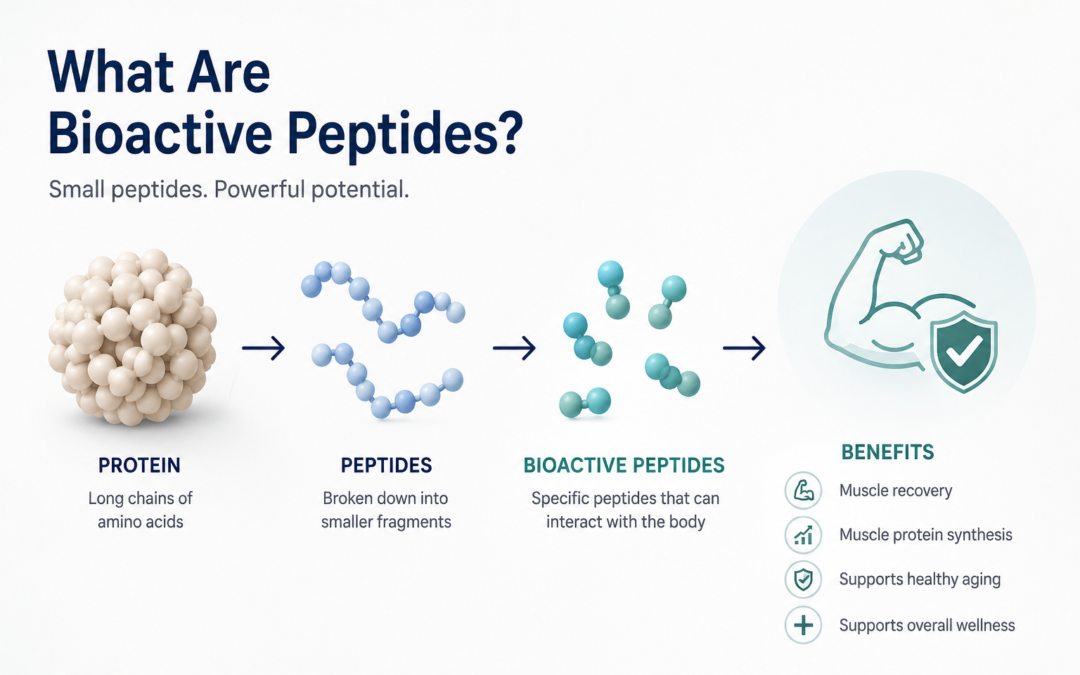
What Are Bioactive Peptides?
Protein has long been recognized as an essential nutrient for building and maintaining muscle.
But in recent years, scientists have begun paying closer attention to something much smaller—bioactive peptides.
Although they originate from proteins, bioactive peptides are not simply “small proteins.” They are naturally occurring fragments that may play unique roles in supporting the body’s normal biological functions.
This growing area of nutrition science is changing the way researchers think about muscle health, recovery, and healthy aging.
From Protein to Peptides
Proteins are made up of long chains of amino acids.
During digestion—or through specialized manufacturing processes—these long protein chains can be broken down into much smaller pieces called peptides.
Some of these peptides are biologically active, meaning they can interact with specific processes inside the body.
These are known as bioactive peptides.
What Makes Bioactive Peptides Different?
Traditional dietary protein provides the amino acids your body needs to build and repair tissues.
Bioactive peptides may do more than simply provide building blocks.
Research suggests that certain bioactive peptides can interact with biological pathways involved in areas such as:
- Muscle recovery
- Muscle protein synthesis
- Inflammation
- Metabolic health
- Healthy aging
Importantly, not all peptides have the same functions.
Different peptides have different biological properties depending on where they come from and how they are produced.
Where Do Bioactive Peptides Come From?
Bioactive peptides can be naturally derived from a variety of protein sources, including:
- Milk proteins
- Eggs
- Fish
- Soy
- Beans and legumes
Advances in food science and biotechnology now allow researchers to identify specific peptides with promising biological properties and produce them consistently for nutritional applications.
Why Are Researchers Interested?
As our understanding of nutrition has evolved, scientists have realized that nutrients do more than simply provide calories or basic building materials.
Certain nutrients may also influence how the body functions at the cellular level.
Bioactive peptides are one example of this emerging field of research.
Rather than replacing exercise or a balanced diet, they are being studied for their potential to complement healthy lifestyle habits and support the body’s natural response to physical activity.
Bioactive Peptides and Muscle Health
Muscle health depends on more than exercise alone.
Recovery, sleep, nutrition, hydration, and regular physical activity all work together to maintain healthy muscle function.
Within this broader picture, researchers are exploring how specific bioactive peptides may help support muscle recovery and muscle protein synthesis, particularly when combined with resistance exercise and adequate protein intake.
While research is ongoing, interest in this area continues to grow as scientists seek new ways to support healthy aging and active lifestyles.
The Future of Nutrition Science
Nutrition science is moving beyond the idea that all proteins work in exactly the same way.
Researchers are increasingly studying how specific components within foods may have unique biological functions.
Bioactive peptides represent one of the most exciting developments in this field.
As scientific understanding continues to evolve, these naturally derived compounds may play an increasingly important role in supporting muscle health, recovery, and overall wellness.
The Bottom Line
Bioactive peptides are naturally occurring fragments of proteins that may support specific biological processes in the body.
While traditional protein remains the foundation of muscle health, ongoing research suggests that certain bioactive peptides may provide additional support for recovery, muscle function, and healthy aging as part of a balanced diet and active lifestyle.
As research continues, bioactive peptides are helping shape the future of evidence-based nutrition.