
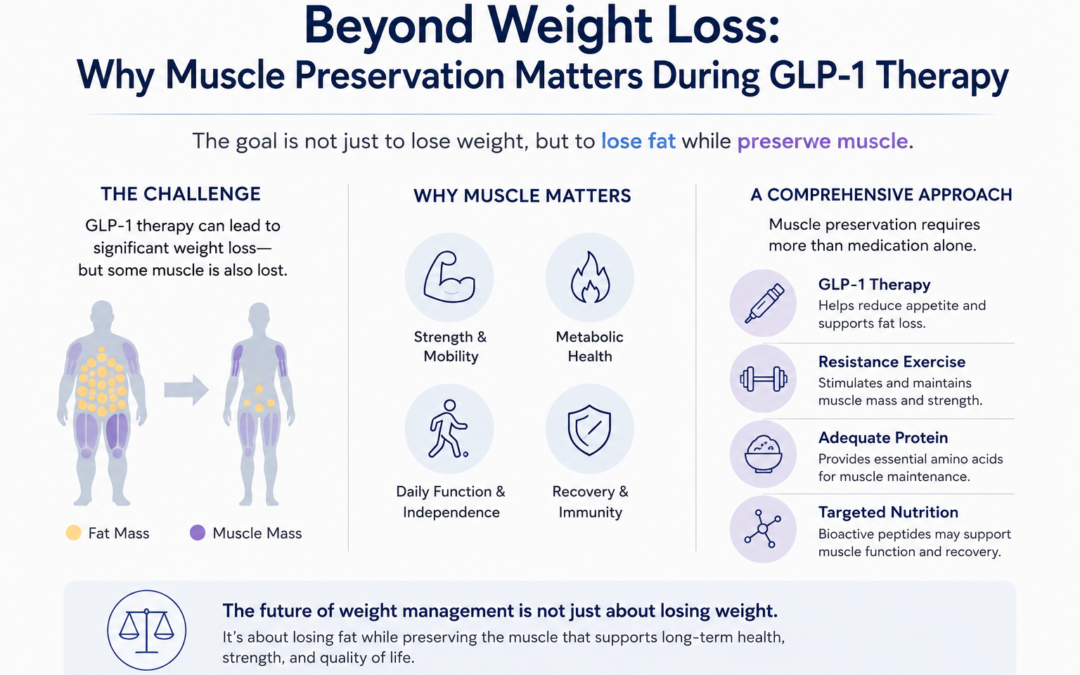
Beyond Weight Loss: Why Muscle Preservation Matters During GLP-1 Therapy
As GLP-1 medications transform obesity treatment, preserving muscle has become one of the most important conversations in modern weight management.
A New Era in Weight Management
The introduction of GLP-1 receptor agonists such as semaglutide and dual GIP/GLP-1 receptor agonists such as tirzepatide has fundamentally changed the treatment of obesity and metabolic disease.
Patients are achieving levels of weight loss that were previously difficult to accomplish without bariatric surgery. Beyond reducing body weight, these medications have demonstrated meaningful benefits for blood glucose control, cardiovascular health, and overall quality of life.
This represents one of the most significant advances in obesity medicine in recent decades.
However, as clinical experience with GLP-1 therapies continues to grow, healthcare professionals are increasingly asking an important question:
How can patients lose fat while preserving the muscle they need for long-term health?
Today, successful weight management is no longer measured simply by kilograms lost. Increasingly, it is defined by improving body composition while maintaining strength, physical function, and metabolic health.
Weight Loss Is More Than a Number on the Scale
When patients lose a significant amount of weight, they typically lose both fat mass and lean body mass.
While some reduction in lean mass is expected during any weight-loss intervention, preserving skeletal muscle has become an important consideration during GLP-1 therapy.
Skeletal muscle is far more than tissue that enables movement. It plays a central role in:
- Physical strength and mobility
- Healthy metabolism
- Balance and stability
- Glucose regulation
- Recovery from illness and exercise
- Healthy aging
For many patients—particularly older adults—maintaining muscle may be just as important as reducing body fat.
Why Muscle Preservation Matters
Many people associate weight loss with better health.
However, the quality of weight loss matters.
Losing excess body fat can improve metabolic health, but excessive loss of muscle may contribute to:
- Reduced strength
- Increased fatigue
- Lower physical performance
- Reduced metabolic rate
- Greater difficulty maintaining weight loss over time
Muscle is one of the body’s most metabolically active tissues. It supports daily activities, protects independence as we age, and contributes significantly to long-term health.
The objective is therefore not simply to lose weight—but to lose fat while preserving muscle.
A Shift Toward Body Composition
Traditionally, many weight-loss programs focused primarily on changes in body weight or Body Mass Index (BMI).
Today, clinicians are increasingly recognising that body composition provides a more meaningful picture of patient progress.
Rather than asking:
“How much weight has the patient lost?”
The more valuable question may be:
“How much fat has the patient lost—and how much muscle has been preserved?”
Modern weight management is therefore placing greater emphasis on monitoring:
- Skeletal muscle mass
- Body fat percentage
- Physical function
- Grip strength
- Overall quality of life
This broader approach helps clinicians optimize patient outcomes beyond the number displayed on the scale.
Supporting Muscle During GLP-1 Therapy
Current clinical recommendations consistently emphasize that muscle preservation requires a comprehensive approach.
Three key components are widely recognized:
Resistance Exercise
Resistance training provides the stimulus needed to maintain muscle mass and strength during periods of weight loss.
Adequate Protein Intake
Protein supplies the amino acids required for muscle protein synthesis and recovery.
Meeting daily protein requirements becomes particularly important for patients experiencing reduced appetite while taking GLP-1 medications.
Targeted Nutritional Support
Researchers are increasingly investigating nutritional strategies that may provide additional support for muscle health during weight management.
Among these, bioactive peptides have attracted growing scientific interest for their potential role in supporting muscle function and recovery.
Looking Beyond Traditional Protein
Although dietary protein remains the foundation of muscle nutrition, emerging research suggests that specific bioactive peptides may influence the body’s natural muscle-building and recovery processes differently from conventional protein sources.
One example is PeptiStrong®, a patented plant-derived peptide ingredient discovered using artificial intelligence and developed through extensive scientific research.
Clinical studies have demonstrated that PeptiStrong® may support:
- Muscle strength
- Functional recovery
- Muscle protein synthesis
- Healthy muscle maintenance
While research into muscle preservation during GLP-1 therapy continues to evolve, these advances highlight an important direction for future nutritional strategies.
The Future of Weight Management
Weight management is entering a new phase.
The conversation is shifting beyond simply helping patients lose weight toward helping them maintain the strength and physical function needed for lifelong health.
For healthcare professionals, success increasingly means supporting patients in achieving healthier body composition—not just lower body weight.
For patients, it means feeling stronger, remaining active, and protecting their quality of life throughout their weight-loss journey.
As obesity medicine continues to advance, muscle preservation is becoming an essential part of comprehensive patient care.
Beyond Weight Loss
GLP-1 therapies have transformed the treatment of obesity, offering new hope to millions of people worldwide.
The next challenge is ensuring that this weight loss supports long-term health—not only through fat reduction but also through the preservation of muscle, strength, and physical function.
At Vital STRONG®, we believe the future of weight management extends beyond the number on the scale.
It is about helping people lose fat, preserve muscle, and continue living stronger, healthier, and more active lives.
References
- Jastreboff AM, et al. Tirzepatide Once Weekly for the Treatment of Obesity. New England Journal of Medicine. 2022.
- Wilding JPH, et al. Once-Weekly Semaglutide in Adults with Overweight or Obesity. New England Journal of Medicine. 2021.
- American College of Sports Medicine (ACSM). Position Statements on Resistance Exercise.
- International Society of Sports Nutrition (ISSN). Position Stand: Protein and Exercise.
- Nuritas. GLP-1 Weight Loss, Muscle Preservation, Sleep and the Future of Women’s Metabolic Health.